

A Colour with Meaning

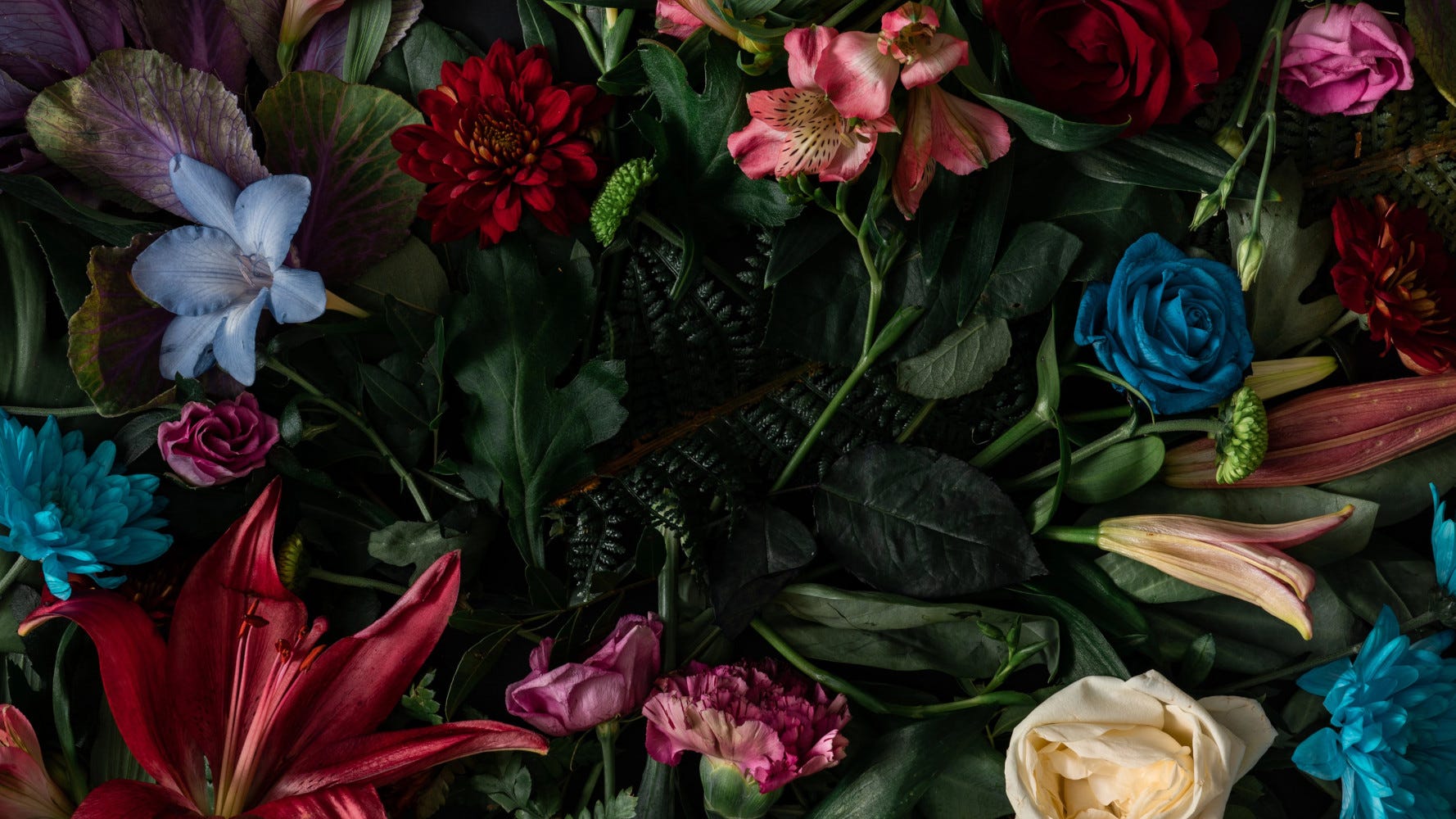
I talk a lot about symbols in worldbuilding: banners, gestures, relics, landmarks. But one of the most visible forms of symbolism is colour. Colours carry meaning, memory, and emotion. And in your worldbuilding, they can do a lot of heavy lifting, and do it fast.
Think of the ways we add meaning to colour in our world; a black armband at a funeral, a white dress at a wedding, red poppies, uniforms that denote role or rank. The colour communicates information. It becomes a message.
But the meanings we assign to colours aren’t universal. In some places, red means luck, in others; danger. White might be a colour of purity, or of mourning. It all depends on the cultural context, and that’s exactly where the worldbuilding opportunities begin.
Worldbuilding Through Colour
When you assign meaning to a colour in your world, you’re building layers of cultural memory, and giving your characters a silent language to work with. You’re allowing your world to speak visually, through garments, flags, herbs, wax seals, candlelight, or flower petals.
A colour might signal:
A seasonal change, like green ribbons worn for the spring festival.
A class division, where nobles wear silver and commoners are restricted to brown and blue.
A political movement, with protesters painting their doors yellow.
A superstition, where red thread is stitched into every child’s collar.
A personal ritual, like tying a white scarf to your walking staff before a long journey.
You can also assign meaning to shades and tones. Pale blue might symbolise a birth in one culture, while deep navy is reserved for state funerals. Rose pink might represent a coming-of-age milestone. A very specific shade of purple might only be worn by the living relatives of an overthrown royal house.
And of course, meanings can shift over time. Maybe green once signified loyalty to the old gods, but is now worn defiantly by secret worshippers in a more modern, monotheistic society. Maybe blue was the colour of mercy… until the Blue Reign massacres, after which it was forever tainted.
Colour as a Signal
When you choose a colour with meaning, you also gain a storytelling shortcut. You can use it as a visual signal for your readers or players.
Let’s say your setting includes a lost temple that was once painted in orange. The people no longer remember why, but that same pigment is still mixed into charm paints, or worn during a local ritual. When your characters enter the ruins, they might not know what the colour means, but your audience will feel the connection. That moment of recognition becomes a subtle breadcrumb. A clue without exposition.
Questions to Explore
Which colours carry symbolic meaning in your world, and where did those meanings originate?
Are any colours restricted, outlawed, or reserved for certain people?
Are there regional or cultural disagreements about what a colour means?
Has any event changed the way people view a colour (e.g. a rebellion, disaster, scandal)?
Do your characters care about these meanings, or do they deliberately challenge them?
Ready to Grow a New World?
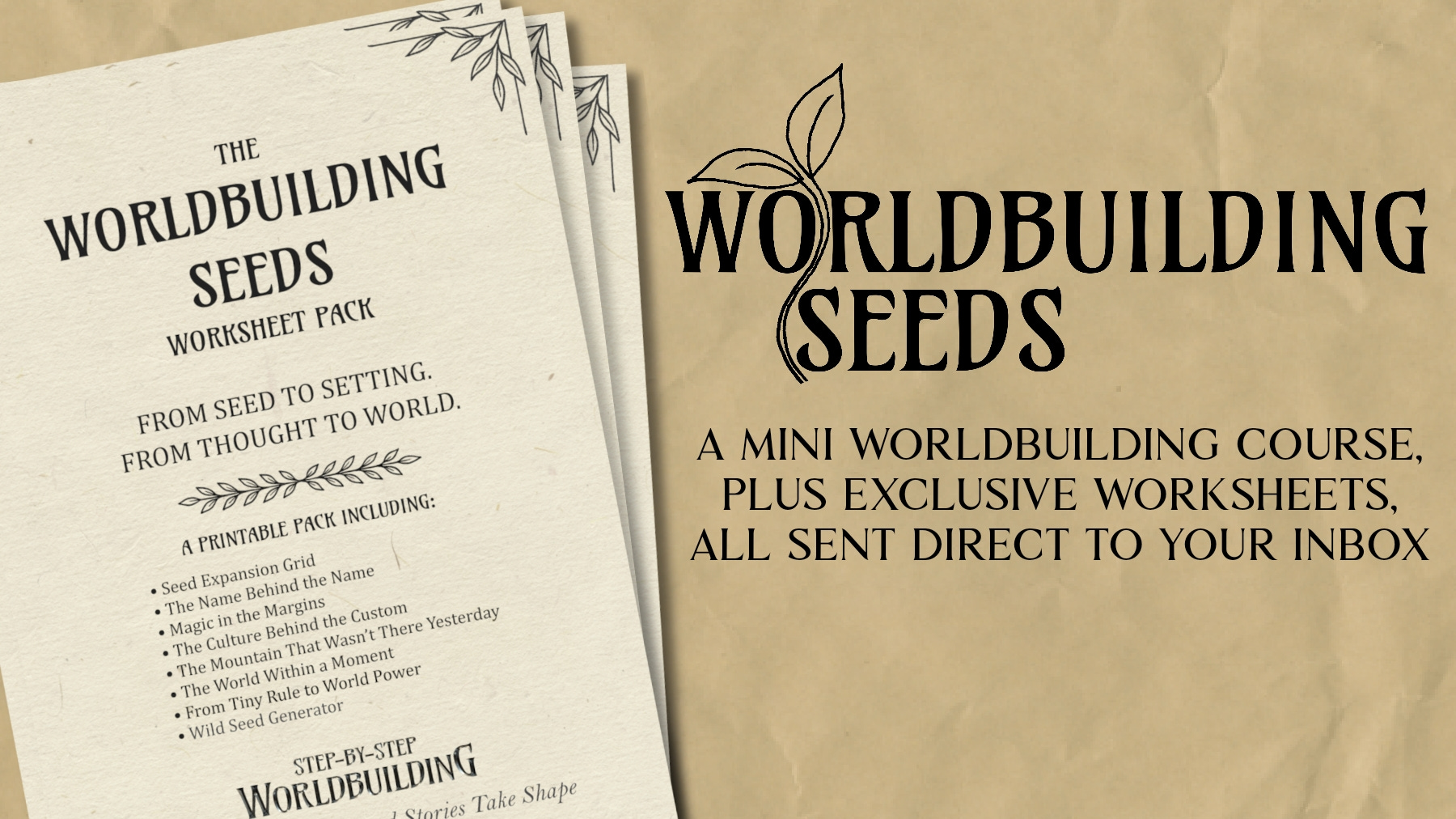
Worldbuilding Seeds is back for a second round!
This free 4-day mini email course will help you build significant worldbuilding elements from single, tiny details, just like the one you’ve explored today. It runs from 24th - 27th February, and sign-ups are open now.
You’ll receive one creative email a day, full of worldbuilding prompts and examples, and a free worksheet pack on the final day.
Whether you’re a writer, a GM, a mapmaker, or just someone who loves inventing new worlds, Worldbuilding Seeds is designed to help you start small… and build something brilliant.
👉 Sign up here.
Your world awaits.
Colors are visible coments upon a world.
I’m happy to see someone sharing advice like this, especially for people who are still beginners in the field. Wishing you success!